Workwear buying tips
Nov 13, 2026 5 min read
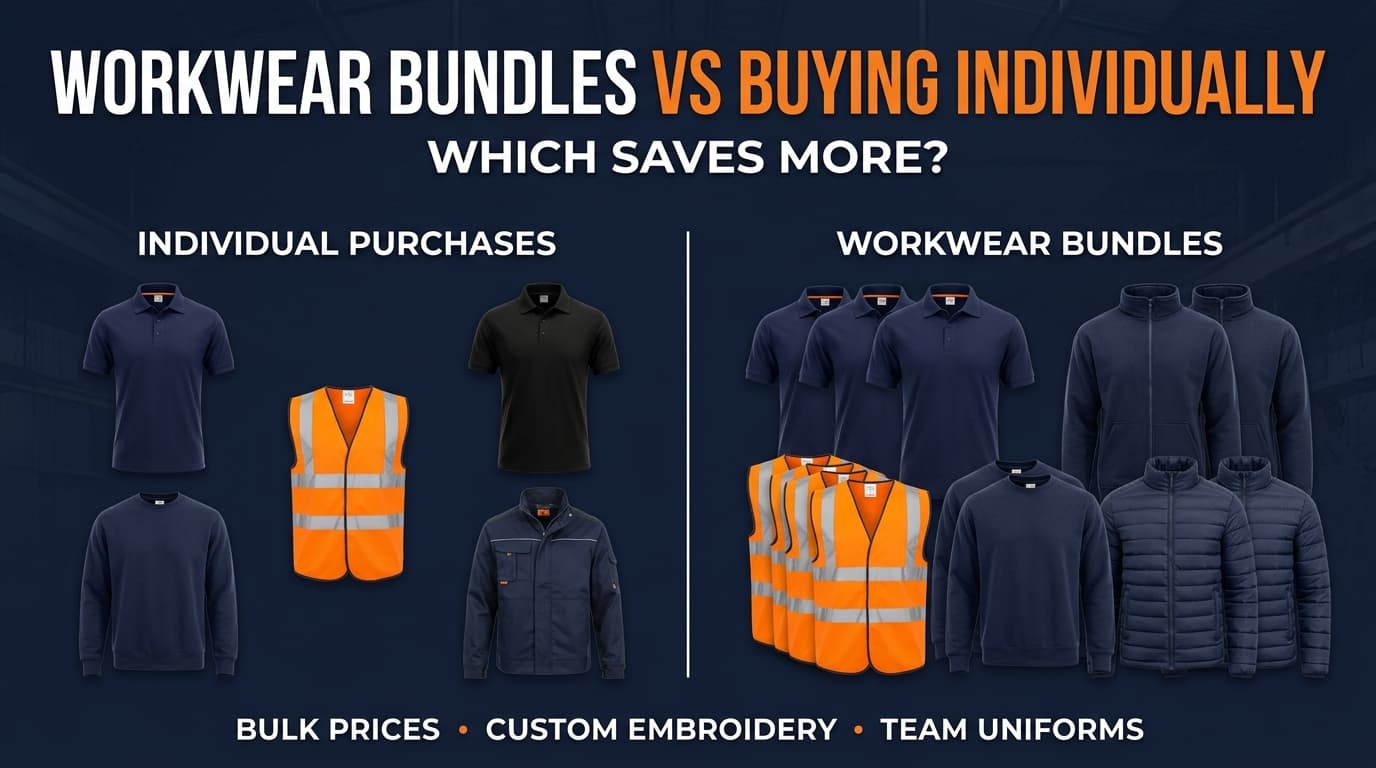
Workwear Bundles vs Buying Individually: Which Saves More?
Fariha Wadud
10% Discount For New CustomerPromo Code: NEW10Free Shipping On Order 99.99
Our Deals & Bundles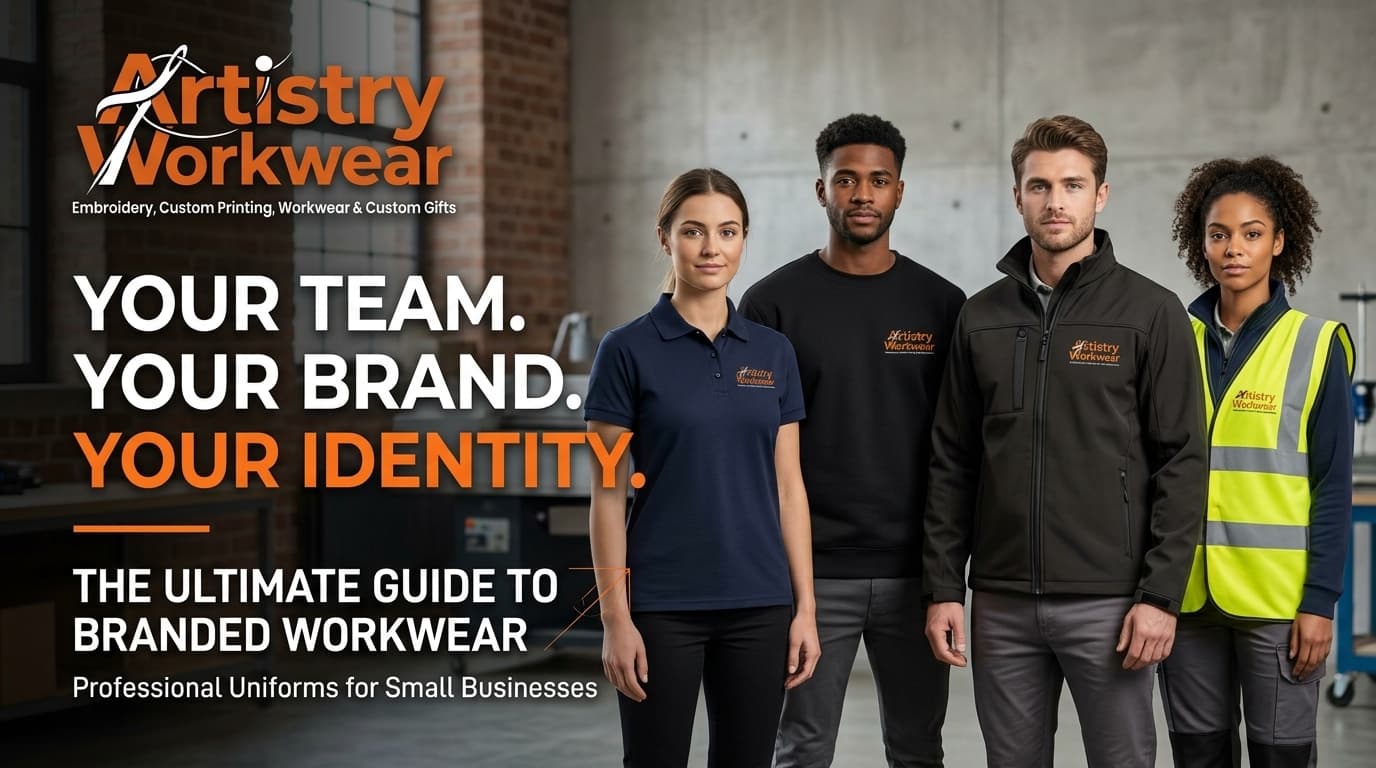
Running a small business means every customer interaction matters. From the first phone call to the final delivery, the way your team presents itself can influence how customers perceive your company.
Branded workwear is a practical way to create a consistent business identity while giving employees comfortable, suitable clothing for their everyday responsibilities.
Whether you operate a construction company, independent café, beauty salon or professional cleaning service, the right uniform can help your business look organised, recognisable and professional.
However, choosing workwear involves more than simply putting a logo on a T-shirt. You need to consider the working environment, garment quality, branding method, employee comfort, budget and how your uniform requirements may change as your business grows.
In this guide, we explain everything small businesses need to know about choosing, customising and ordering branded workwear in the UK.
Branded workwear is clothing customised with a company's visual identity, typically through embroidered logos, printed designs, business names or other identifying details.
It can include everyday uniforms, protective clothing, outerwear and accessories.
Common examples include:
The purpose is to create a consistent appearance without compromising the practical requirements of the job.
For a small business, branded clothing can also help establish a recognisable identity before investing in more extensive marketing activities.
Professional uniforms are not exclusively for large companies. Even a business with two or three employees can benefit from a coordinated appearance.
Here are some of the main advantages.
Your employees represent your business whenever they visit customers, attend appointments or work in public spaces.
A clearly displayed company logo helps people associate your team with your business name and services.
For example, a plumbing company with embroidered polo shirts and branded jackets creates a more consistent appearance when visiting residential properties.
Over time, repeated exposure to your branding can help customers become more familiar with your business.
Customers often make initial judgements based on what they can see.
A team wearing coordinated, clean and appropriately branded uniforms can communicate organisation and attention to detail.
This is particularly important for businesses where employees regularly interact with customers face-to-face.
Branded uniforms help customers distinguish employees from visitors, contractors and other members of the public.
This is useful in cafés, salons, warehouses, cleaning operations and customer-facing workplaces.
A shared uniform can create a stronger sense of belonging among employees.
It gives staff a consistent appearance and reinforces their connection to the business.
Workwear can create opportunities for brand visibility beyond traditional advertising.
Employees wearing branded clothing may introduce your business to people who have not previously encountered your services.
Unlike a temporary advertisement, a well-maintained garment can be worn repeatedly.
Different industries have different uniform requirements. A construction worker needs practical clothing that accommodates physical work, while a salon employee may require a more refined and customer-facing appearance.
The best approach is to select garments according to the working environment.
Construction companies, electricians, plumbers, roofers and maintenance contractors often need durable clothing suitable for demanding working conditions.
Recommended garments include:

For everyday branding, an embroidered left-chest logo can create a clean and professional finish.
Larger printed designs on the back can display the company name, contact number or website.
For safety-critical environments, always ensure that customisation does not compromise the garment's required protective or high-visibility performance. Check the relevant garment specifications and applicable standards before adding branding.
In hospitality, uniforms contribute to both presentation and practical working standards.
Staff clothing should be comfortable, easy to maintain and suitable for food-service environments.
Recommended garments include:
Aprons are particularly useful because they provide a practical surface for displaying a business logo.
A café might choose embroidered aprons for front-of-house employees and comfortable branded T-shirts for kitchen or takeaway staff.

Salons often benefit from a coordinated uniform that reflects their business identity.
The clothing should allow employees to move comfortably while maintaining a smart appearance throughout the working day.
Suitable options include:
A small embroidered logo on the left chest can create a subtle, professional finish without making the uniform look overly promotional.

Cleaning businesses require clothing that supports movement, comfort and frequent washing.
Employees may work across multiple locations, making identifiable uniforms particularly useful.
Recommended garments include:
A company logo on the left chest, combined with a larger back print displaying the business name, can help customers identify cleaning staff quickly.

Employees working in delivery, logistics and warehouse environments may need uniforms that accommodate movement, changing temperatures and operational requirements.
Useful garments include:
The most suitable combination depends on whether employees primarily work indoors, outdoors or between different locations.

Choosing the right garments is essential for creating a uniform that employees will actually want to wear.
Here are some popular options.
T-shirts are one of the most versatile choices for branded business clothing.
They are suitable for tradespeople, hospitality staff, cleaning teams, events and promotional activities.
Printing works particularly well for detailed designs, larger graphics and business information.
Explore custom workwear T-shirts.
Polo shirts offer a balance between everyday comfort and a smart appearance.
They are especially popular with customer-facing businesses, including cleaning companies, maintenance teams, hospitality staff and office-based services.
A small embroidered left-chest logo creates a professional and understated finish.
Explore polo shirts.
Hoodies and sweatshirts are useful for employees working in cooler environments or businesses that require additional uniform layers.
They can be customised with embroidery or suitable printing methods.
A small chest logo combined with larger back branding can provide a coordinated appearance.
Explore custom hoodies and sweatshirts.
Outerwear is particularly important for construction teams, delivery drivers and employees working outdoors.
Embroidered branding is a popular choice for jackets and fleeces because it creates a textured, professional finish.
Gilets are another practical option when employees need an additional layer without restricting arm movement.
Explore workwear jackets and outerwear.
High-visibility garments are important in environments where workers need to be easily seen.
Suitable options include hi-vis vests, jackets, polo shirts and T-shirts.
Customisation should always be compatible with the garment's safety requirements. Never assume that adding a logo automatically preserves compliance.
Explore hi-vis workwear.

One of the most important decisions when ordering custom uniforms is choosing how your logo will be applied.
The two popular options are embroidery and garment printing.
Neither method is universally better. The right choice depends on your design, garment, working environment and budget.
Embroidery uses coloured threads to stitch a design directly into a garment.
It creates a raised, textured finish that is particularly suitable for professional uniforms.
Best suited for:
Advantages:
Very small lettering and intricate artwork may need to be simplified to achieve a clean result.
Direct-to-Film (DTF) printing involves printing a design onto a specialised film before transferring it onto a garment using heat and adhesive.
It is particularly useful for colourful artwork, detailed graphics and designs containing multiple colours.
Best suited for:
Advantages:
Correct application and garment care are important for achieving a durable result.

Screen printing is another established method used for custom apparel.
It applies ink through a prepared screen onto the garment. Each colour generally requires a separate screen, which means design complexity and setup can influence the production cost.
DTF and screen printing serve different requirements.
Which should you choose?
Choose DTF when your business needs detailed artwork, multiple colours, personalised designs or smaller production runs.
Screen printing may be more suitable when ordering larger quantities of garments featuring the same design, particularly where the artwork uses a limited number of colours.
Both methods can produce professional results when the garment, artwork and production process are suitable.
At Artistry Workwear, we offer custom printing and embroidery to help businesses choose a suitable finish for their clothing.
For a more detailed comparison, see our supporting resource: DTF vs. Screen Printing: Which Is Better for Your Custom Apparel Business?
Even a high-quality logo can look unprofessional if it is positioned incorrectly.
The placement should complement the garment and make the branding easy to recognise.
Popular logo positions include:
Left chest: A traditional option for company logos on polo shirts, T-shirts, jackets and sweatshirts.
Large back: Useful for displaying business names, websites, telephone numbers and larger graphics.
Right arm: Suitable for secondary branding or additional company details.
Front centre: Often used for promotional garments and event clothing.
Headwear: Embroidered logos on caps and beanies help complete a coordinated uniform.
For most small businesses, starting with a left-chest logo is a practical approach. Additional branding can be introduced where it serves a clear purpose.
There is no universal quantity that works for every business.
Your requirements will depend on employee numbers, working schedules, laundry arrangements and the type of work being carried out.
A useful starting point is to consider:
For example, a small cleaning business with four employees might begin with several polo shirts per employee, alongside additional sweatshirts or jackets for colder conditions.
A café may need separate garments for kitchen and front-of-house staff.
Rather than ordering large quantities immediately, consider starting with a practical uniform selection and expanding as the business grows.
Your logo is one of the most important parts of your branded uniform.
Providing suitable artwork helps ensure that the final design looks clear and professional.
Before submitting your logo, consider the following:
Use a high-resolution file: Low-quality images may appear blurry or pixelated when enlarged.
Choose a suitable format: Vector files such as SVG, EPS and AI are useful for maintaining sharp edges. High-resolution PNG and PDF files may also be suitable.
Check the colours: Ensure your logo colours work against the garment colour.
Simplify intricate designs: Very small details may not translate effectively into embroidery.
Consider the garment material: Different fabrics and garment constructions may require different customisation approaches.
If you are unsure whether your logo is suitable, have it reviewed before production.
Before placing an order, make sure you have considered the following factors.
Employees should be able to move comfortably while performing their responsibilities.
Consider garment sizing, fabric weight, cut and fit before selecting a uniform.
Different working environments require different garment properties.
For example, outdoor workers may benefit from weather-resistant outerwear, while hospitality employees may prioritise comfortable and easy-care clothing.
Your uniform should complement your existing brand identity.
Choose garment colours that work with your logo and can be reordered consistently.
Calculate your requirements before ordering.
Consider the garment cost, customisation method, quantity, delivery and any additional branding positions.
Small businesses often grow, recruit new employees or change their uniform requirements.
Selecting consistent garment styles and keeping your logo artwork organised can make future orders easier.
Ordering branded workwear does not need to be complicated.
At Artistry Workwear, the process can be approached in four straightforward steps.
Step 1: Choose Your Garments
Select the clothing that suits your industry, employees and working environment.
Step 2: Submit Your Logo
Provide your company artwork and specify your preferred colours and branding positions.
Step 3: Review Your Design
Check the digital mock-up to confirm that the logo placement and appearance are correct before production.
Step 4: Receive Your Order
Once approved and produced, your branded garments are prepared for collection or delivery.
Planning ahead and confirming your garment sizes, quantities and artwork can help avoid unnecessary delays.
A uniform should be practical, comfortable and consistent with your company's identity.
Avoid these common mistakes:
A little preparation can make a significant difference to the finished uniform.
Yes. Small businesses can order customised garments without necessarily needing a large production run. Artistry Workwear supports individual garments as well as larger team orders.
It depends on the design and garment. Embroidery is particularly suitable for professional logos on polo shirts, jackets and fleeces. Printing is often better for detailed, colourful graphics and larger designs.
DTF transfers a printed design from specialised film onto a garment using heat. Screen printing applies ink directly through a prepared screen. DTF is useful for detailed designs and smaller customised orders, while screen printing can be economical for larger runs of consistent artwork.
Branded polo shirts and T-shirts are popular everyday choices. Sweatshirts and jackets can provide additional warmth for employees working in cooler environments.
Polo shirts, T-shirts, chef jackets and branded aprons are practical options. The choice depends on staff responsibilities and the appearance of the business.
Yes, suitable hi-vis garments can be customised. However, branding must not compromise the garment's visibility, reflective properties or required safety compliance.
Yes. A business can create a coordinated uniform using different garments, such as polo shirts, hoodies, jackets, fleeces and caps, while maintaining consistent branding.
Consider your logo design, garment material, desired finish and how the clothing will be used. A customisation specialist can help recommend an appropriate method.
Your workwear is an everyday representation of your business. Choosing suitable garments, consistent colours and professional branding can help your team look organised while ensuring that their clothing meets the demands of their working environment.
Whether you need embroidered polo shirts for a small business, printed T-shirts for a growing team, branded aprons for a café or practical outerwear for tradespeople, choosing the right combination makes all the difference.
At Artistry Workwear, we provide custom embroidery and printing for businesses across the UK, with options for individual garments and larger team orders.
Explore our workwear collection or contact our team to discuss your requirements.
Artistry Workwear
Precision Custom Embroidery & Print
Website: https://www.artistryworkwear.com
Email: info@artistryworkwear.com
Telephone: 020 4541 1183